Hair loss is rarely just about hair. It is about time. It is about the subtle, often sinking feeling that accompanies looking in the mirror and seeing a version of yourself that feels older than you actually are. For men, it might be the receding temple that signals the end of youth; for women, it might be the widening part that creates anxiety under bright lights.
For decades, the industry response to this emotional struggle was polarized: you could either buy ineffective shampoos at the drugstore or undergo painful, expensive surgery. There was very little middle ground.
But today, the landscape of aesthetic medicine has shifted. We have moved from the era of “covering up” to the era of “waking up.”
At the center of this revolution is PRP therapy for hair loss.
This isn’t a synthetic drug. It isn’t a cover-up. It is a method of harnessing the raw regenerative power swimming in your own veins to revitalize your scalp. If you are seeking a solution that is natural, scientifically grounded, and fits seamlessly into a busy lifestyle, PRP therapy for hair loss is likely the breakthrough you have been searching for.
The Biology of Belief: What is PRP?
To understand why PRP therapy for hair loss is becoming the gold standard for non-surgical restoration, we have to look at the blood itself.
Most people think of blood merely as a transport system for oxygen. While red blood cells do carry oxygen, a significant portion of your blood is made up of plasma and platelets. Platelets were long thought to be simple “clotting cells” the body’s emergency bandage. But modern science has revealed they are much more than that. They are the body’s primary responders for healing.
Packed inside every platelet are “granules” filled with Growth Factors. These are powerful protein signaling molecules. When your body is injured, platelets rush to the scene, burst open, and release these growth factors to tell the tissue to repair, rebuild, and regenerate.
PRP (Platelet-Rich Plasma) is essentially a bio-hack. By concentrating these platelets to levels far higher than what is found in normal blood, we create a super-potent “healing cocktail.” When used in PRP therapy for hair loss, we deliver this cocktail directly to the struggling hair follicles.
How PRP Rescues the Hair Follicle
Hair loss is technically a process of miniaturization. The follicle doesn’t just disappear overnight; it gets smaller, weaker, and spends more time in the “resting” phase (Telogen) and less time in the “growing” phase (Anagen).
PRP therapy for hair loss works by reversing this trend through specific biological pathways:
- Vascular Endothelial Growth Factor (VEGF): This is the architect of blood vessels. It encourages angiogenesis the formation of new blood flow networks around the follicle. More blood means more oxygen and nutrients, which are critical for hair survival.
- Platelet-Derived Growth Factor (PDGF): This stimulates cell replication, helping the hair shaft grow thicker and faster.
- Epidermal Growth Factor (EGF): This promotes the health of the skin and scalp environment, ensuring the “soil” is healthy for the “plant.”
When we inject PRP, we are essentially screaming “GROW” at a cellular level. We are forcing the follicles out of their slumber and back into active duty.
The “Concierge” Difference: Mobile Medical Services
While the science of PRP therapy for hair loss is impressive, the delivery method matters just as much. Traditionally, getting this treatment meant driving to a plastic surgery center or a med-spa. It meant traffic, waiting rooms, and the awkwardness of sitting in a lobby while worried about your hairline.
We believe that restoration should be relaxing. This is why the rise of mobile medical services is changing the industry.
Imagine this: A licensed medical professional arrives at your door. You are in your own home, perhaps watching a game or catching up on emails. There is no commute. There is no waiting room. The provider sets up a sterile environment right there in your living room.
They perform the blood draw, spin the plasma in a portable centrifuge, and administer the treatment while you are completely at ease. This isn’t just about luxury; it’s about reducing stress. Stress is a known inhibitor of hair growth (via cortisol). By removing the stress of the appointment through mobile medical services, you are actually creating a better physiological environment for the treatment to work.
The Procedure: Simplicity in Action
One of the greatest advantages of PRP therapy for hair loss is its simplicity. It is an “autologous” procedure, meaning it comes from you. There is no risk of allergic reaction because it is your own biology.
The Draw It starts with a simple blood draw from the arm, similar to a routine lab test.
The Spin The blood is placed in a centrifuge. This device spins at high velocity to separate the red blood cells from the liquid gold the plasma and platelets. We aim for a specific concentration that is optimal for PRP therapy for hair loss.
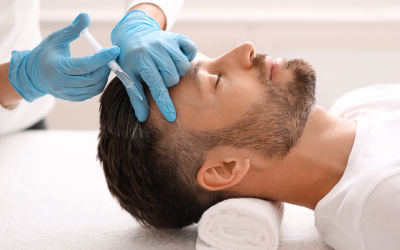
The Activation and Injection The scalp is numbed to ensure comfort. The concentrated plasma is then injected via a fine needle into the areas of thinning. The entire process takes less than an hour.
Because there are no incisions or sedation, the recovery is instant. You can shower the next morning. You can work immediately. It is the ultimate “lunch break” procedure, made even more convenient when the clinic comes to you.
Stacking Therapies: The Holistic Approach
While PRP therapy for hair loss is powerful on its own, the most dramatic results often come from a “stacking” approach. Your hair health is a reflection of your systemic health. By integrating other therapies, you can supercharge the results.
1. Peptide Therapy
Peptides are short chains of amino acids that act as signaling molecules. Certain peptides, such as GHK-Cu (Copper Peptide), have an incredible affinity for hair growth. They reduce inflammation and improve blood flow. combining peptide therapy with PRP creates a “one-two punch” where PRP provides the growth factors and peptides provide the daily signaling support to keep the follicles active.
2. IV Therapy
Healthy hair needs a healthy host. If you are dehydrated or deficient in micronutrients, your body will prioritize keeping your organs alive over growing hair. Hair is “non-essential” tissue to the body. This is where IV therapy comes in. During your PRP session, you can simultaneously receive an IV drip loaded with fluids, Zinc, B-Vitamins, and Biotin. This ensures that when the PRP wakes up the follicles, they have the raw materials needed to build new hair.
3. Hormone Optimization
Sometimes, hair loss is the smoke, and hormones are the fire. In men, low testosterone or high estrogen can contribute to thinning; in women, thyroid or reproductive hormone imbalances are common culprits. Before or during your hair restoration journey, looking into Testosterone Replacement Therapy or general hormone balancing is crucial. If the hormonal root cause isn’t addressed, you are swimming upstream. PRP therapy for hair loss can fix the damage, but hormone optimization stops the attack.
4. Exosome Therapy
If PRP is the latest technology, exosome therapy is the future. Exosomes are not cells; they are the “messages” released by stem cells. They contain a highly concentrated dose of mRNA and proteins. For patients with advanced thinning, or those who want the absolute strongest stimulation available, combining PRP with exosomes is the pinnacle of regenerative hair care.
Who is the Ideal Candidate?
PRP therapy for hair loss is not a magic wand for every single person. It relies on the presence of living follicles.
The Best Candidates:
- Early Stage Thinners: If you have just started noticing a widening part or a receding hairline in the last 1-5 years.
- Diffuse Thinners: People who have hair all over, but the density has dropped significantly.
- Alopecia Areata: Patients with patchy hair loss often see rapid recovery with PRP.
- Women with Post-Partum Shedding: PRP can help “reset” the clock after the hormonal shifts of pregnancy.
Less Ideal Candidates:
- Long-Term Baldness: If an area of the scalp has been completely smooth (skin-like) for 10+ years, the follicles are likely resorbed. PRP therapy for hair loss cannot grow hair where no follicle exists.
The Timeline: Managing Expectations
We live in a world of instant gratification, but biology moves at its own pace. It is a relationship, not a fling.
- Phase 1 (Treatments 1-2): The “Stop Loss.” The first thing you will notice isn’t regrowth; it’s that the shedding stops. You’ll see less hair in the shower drain. This is a massive victory.
- Phase 2 (Treatments 3-4): The “Sprout.” You will begin to see fine, baby-like hairs (vellus hairs) appearing in the treated areas.
- Phase 3 (6 Months+): The “Maturity.” Those fine hairs darken and thicken into terminal hairs. The overall density of the scalp improves.
A typical protocol involves a series of 3 to 4 treatments spaced about a month apart, followed by maintenance treatments every 4 to 6 months. Think of it like dental cleanings; you do it regularly to maintain health.
Safety and Side Effects
Because PRP therapy for hair loss uses your own blood, the safety profile is exceptional. There is no risk of transmissible disease or rejection.
Common side effects are mild and localized:
- Tenderness: The scalp may feel bruised for 24-48 hours.
- Swelling: Mild swelling on the forehead can occur but is rare.
- Redness: Pin-point redness at injection sites usually fades within hours.
Compared to the risks of surgery (infection, scarring, nerve damage) or the risks of oral medication (sexual dysfunction, brain fog), PRP is incredibly low-risk.
The Cost-Benefit Analysis
It is true that PRP therapy for hair loss is an investment. Insurance rarely covers it. However, when compared to the alternatives, the value becomes clear.
A hair transplant can cost upwards of $15,000 and requires downtime that costs you money in lost work. Daily medications like Minoxidil or Finasteride are a lifetime monthly subscription that stops working the moment you stop paying.
PRP offers a middle ground: a moderate cost for a natural, long-term solution that improves the actual health of your body. When you factor in the value of your confidence the ability to walk into a room and not worry about your hair the return on investment is immeasurable.
Why Location and Provider Matter
Not all PRP is created equal. The equipment used to spin the blood, the technique of injection, and the complementary services offered all play a role in the outcome.
This is why choosing a provider who specializes in regenerative medicine is key. A provider who understands the synergy between stem cell therapy, nutrition, and blood health will get better results than a generic clinic. Furthermore, a provider who offers mobile medical services demonstrates a commitment to patient-centric care. They understand that your time and comfort are part of the healing equation.
Conclusion: Your Turn to Regrow
Hair loss can feel like a sentence, but it doesn’t have to be a life sentence. The science has evolved. We now have the tools to turn back the clock on follicular aging.
PRP therapy for hair loss represents the best of modern medicine: it is effective, it is natural, and it is safe. It bridges the gap between doing nothing and doing something drastic.
If you are tired of counting hairs in the sink; if you are ready to take a proactive, biological approach to your appearance; and if you value the privacy and convenience of in-home care, it is time to explore this option.
You have the power to heal hidden in your veins. Let’s unlock it.
Don’t let another month of shedding go by.
Contact us today to schedule your consultation.
Let’s build a customized, holistic plan perhaps including IV therapy or peptide therapy to ensure your results are as robust as possible. The future of your hair is waiting.